Revolutionizing Solo Development: Building Micro-SaaS with Local AI on Android Without Backend Hassles
The move toward backend-free micro-SaaS
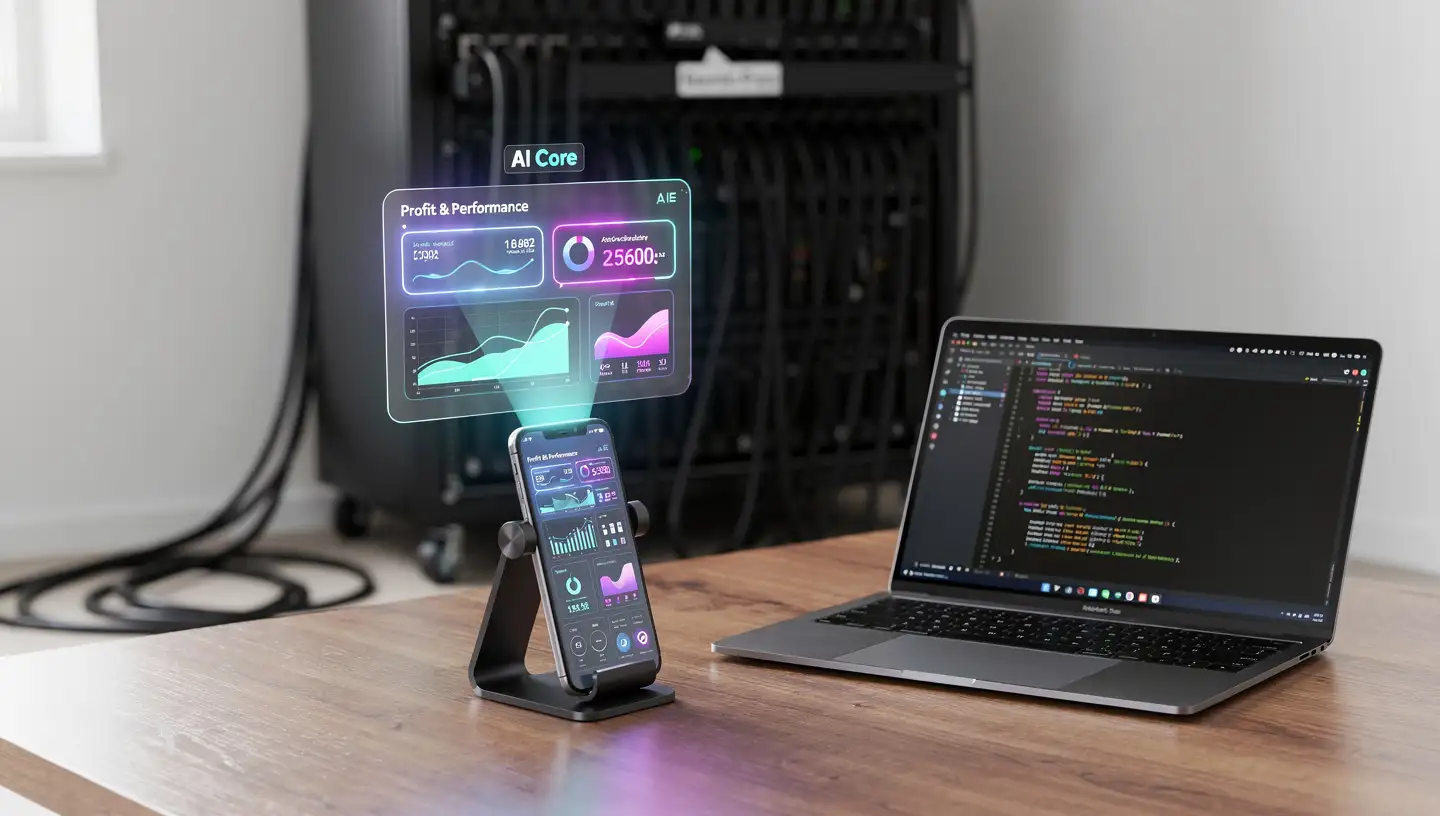
A solo developer can now prototype a focused Android app that analyzes user data with AI in real time, works offline, and does not rely on servers. This shift matters because micro-SaaS products are, by design, small and narrow. They solve one problem for a specific audience. That focus keeps costs low and automation high, which makes them a natural fit for individual founders.
Running AI directly on the device changes the economics of these apps. Instead of sending data to the cloud, Android phones can process it locally. That removes server costs, reduces latency, and avoids dependence on third-party APIs. Features such as personalization, transcription, or basic analytics can now run entirely offline. As micro-SaaS adoption grows, this model allows solo developers to build and ship faster, using only mobile tools and without maintaining backend infrastructure.
The rise of micro-SaaS and why solo founders are leaning in
The shift toward niche SaaS is measurable. In 2023, about 41 percent of SaaS startups targeted niche markets, up from 18 percent five years earlier, according to global SaaS market data (Software as a Service [SaaS] Market Size, Global Report, 2034). These products often score net promoter scores above 50, a sign of strong user loyalty in small but well-defined markets.
For solo founders, the appeal is practical. Micro-SaaS companies can operate with minimal staff and low fixed costs. The spread of no-code and low-code tools has lowered the barrier further, letting founders prototype quickly without building complex backends. On Android, local AI adds another advantage: offline functionality by default.
Former data scientist Shaw Talebi has argued that speed and simplicity matter more than chasing new frameworks when building AI products. He emphasizes using familiar tools to ship quickly. That advice aligns with Android’s on-device AI stack, where tools such as ML Kit let developers add AI features without deep machine-learning expertise. The result is a growing class of small, mobile-first products that scale slowly but sustainably, without cloud infrastructure.
What "on-device AI" actually means
On-device AI refers to running machine-learning models directly on a phone’s hardware, using the CPU, GPU, or dedicated neural processing units, instead of remote servers. For Android apps, this approach has several concrete effects.
First, user data stays on the device. That limits exposure to cloud breaches and reduces compliance risks for apps handling sensitive inputs. This is especially relevant given the scale of cloud incidents in recent years, where breaches have exposed hundreds of millions of records across major providers.
Second, apps do not depend on network quality. Features continue to work in low-bandwidth or offline environments, which matters for global users.
Third, response times improve. Processing happens locally, avoiding network delays. This is critical for features that feel “live,” such as text suggestions or audio summaries.
Hardware improvements make this possible. Mobile AI performance has increased by double digits with each generation, allowing larger generative models to run locally with acceptable battery use. For a solo developer, this means fewer operational costs, simpler architecture, and fewer failure points.
Tools that make local AI on Android practical
Android already includes several mature frameworks for local AI. TensorFlow Lite and PyTorch Mobile adapt mainstream machine-learning libraries for mobile use, focusing on efficiency rather than scale. Apple’s Core ML plays a similar role on iOS, but Android’s ecosystem is more open for experimentation.
Google’s ML Kit is designed for developers without ML backgrounds. It provides ready-made components for tasks such as text recognition, summarization, and image labeling. More recently, Google has exposed Gemini Nano, a small multimodal model, through ML Kit’s generative AI APIs. Gemini Nano runs entirely on the device.
A concrete example is the Google Pixel voice recorder. It uses Gemini Nano to summarize recordings offline. Audio never leaves the phone, and summaries appear almost instantly. The same model supports accessibility features such as offline image descriptions in TalkBack, Android’s screen reader.
Google’s Play for On-device AI system manages model distribution and optimization, reducing app size while maintaining performance.
Outside Google’s stack, Liquid AI’s LEAP platform focuses on small language models for edge devices. LEAP is OS- and model-agnostic and supports Android and iOS. Its library includes models around 300 MB that can run on phones with 4 GB of RAM, with an emphasis on low battery usage. Developers can fine-tune and deploy these models using LEAP’s SDK, including quantized checkpoints for constrained hardware.
Together, these tools make it possible to build AI-enabled Android apps without servers or custom ML pipelines.
Real-world examples of backend-free micro-SaaS
Some of the clearest examples come from consumer apps rather than startups. The Pixel voice recorder shows how a single feature, offline summarization, can deliver value without a backend. The app processes audio locally and produces usable summaries immediately, with no cloud dependency and no custom ML work by the app developer.
Liquid AI’s Apollo app offers another case. It provides private, on-device chat interactions using LEAP models. Conversations never leave the phone. For a solo founder, this approach could support niche conversational apps, such as personal coaching or writing assistance, using models under 300 MB that run on standard Android devices.
Outside mobile, Futari Boy’s widely cited example of building a $70,000 JSON viewer micro-SaaS in six days shows what focused scope can achieve. The product used Vue.js and free Netlify hosting. The same idea could translate to Android: local AI could parse and explain JSON files for non-technical users, entirely on device, without servers.
These examples reflect Shaw Talebi’s point about sticking to familiar stacks. On Android, that often means Android Studio, ML Kit, and lightweight AI models rather than experimental frameworks.
Monetization without a traditional backend
Monetization does not require a server either. On Android, the Google Play Billing Library supports in-app purchases and subscriptions. A developer could offer a freemium model, where basic local AI features are free and advanced capabilities, such as larger models or batch processing, are unlocked via one-time payments or subscriptions.
Payments are handled through Google Play, reducing fraud and payment compliance work. While transactions themselves require connectivity, the core app logic remains offline-first. This mirrors the low-cost distribution model of free web hosting, but adapted to mobile app stores.
Limits and trade-offs
Backend-free does not mean problem-free. Keeping data on the device improves privacy, but developers still need to manage model updates carefully to avoid unintended data leakage.
Accessibility benefits from on-device multimodal models, but hardware fragmentation is a real constraint. Features that run well on newer phones may struggle on older devices. Testing across RAM and chipset tiers remains necessary.
Scalability is bounded by hardware. While mobile chips are improving, they cannot match cloud GPUs. Platforms such as LEAP mitigate this by targeting small language models designed for limited memory and power budgets.
No-code and low-code tools can speed up development, including drag-and-drop ML Kit components in Android Studio. The trade-off is flexibility. Solo founders still need to decide where automation helps and where it limits control.
Looking ahead to 2026
Industry forecasts suggest that by 2026, much of SaaS creation will be partially automated, with AI generating features based on user demand. In this scenario, AI is not an add-on but the core of the product.
For Android micro-SaaS, this likely means interfaces and workflows that adapt in real time, driven by on-device models rather than remote services. Instead of generic dashboards, apps could reshape themselves around individual behavior patterns.
This trend favors small, specialized tools. Local AI makes it feasible to deliver personalization and predictive features without scaling backend infrastructure. As businesses continue to prioritize mobile-first software, Android apps that work offline and respect data boundaries become more attractive.
Conclusion
Local AI on Android changes what solo developers can realistically build. It removes the need for servers, lowers costs, and reduces exposure to cloud breaches. The market data shows sustained growth in niche SaaS, and the tooling has matured enough to support real products, not just demos.
From Google’s ML Kit and Gemini Nano to third-party platforms like Liquid AI’s LEAP, the ecosystem now supports backend-free micro-SaaS at a practical level. For individual founders, this is less about disruption and more about control: fewer dependencies, simpler systems, and products that do one thing well.